Ron Silliman's opposition of SoQ and Post-Avant is patently reductionist and polarized. The likes of Henry Gould and I were pointing this out back in 2005. As I said in that post, where does Poe, who first coined the term SoQ, fit in? Yet Silliman is a juggernaut. I reckon he'll keep on railing against that SoQ strawman regardless of this or any other discussion: he lent us a profoundly deaf ear in the past. For that reason, I only visit Silliman occasionally now. Silliman shares a vast awareness of the *sociology* of poetry, particularly the poetry he is interested in, which for the most part, doesn't do a lot for me. I also appreciate his links lists and astute political observations. But -- he has his axe to grind, and he definitely has something to gain by the likes of you lashing out so verbosely against it. I find it interesting that here at least he links to you, creating (I hope, at long last, he proves me wrong) the disingenuous impression of being "open minded".
Showing posts with label School of Quietude. Show all posts
Showing posts with label School of Quietude. Show all posts
Sunday, January 04, 2009
Silliman, Seth and the SOQ/Post Avant
Seth Abramson has been railing, here and here, most eloquently if wordily, against Ron Silliman's SoQ/Post Avant binary, which Silliman persists, nilly-willy, to promulgate. Oh how familiar to my ears. Here's my comment (slightly amended) which I left on Seth's most recent post, and which, believe it or not, I put some effort into writing.

Saturday, June 16, 2007
In Fine Form
Getting back to Edmonton -- I had a good time at Canadian League of Poets' AGM, meeting friendly and intelligent poets, launching Undressing the Night at the city hall, attending seminars, participating in council meetings where I learned of the travails -- in all their Byzantine intricacies -- of running an arts service organization in these funding-tight times.
The most memorable seminar I attended was one on form poetry. It is significant that at least two-thirds of the poets present -- and there were about 75 or 80 in all, by my guestimate -- attended this seminar, rather than one scheduled at the same time on the Poem Made Visual, about video poems, concrete poems, etc. Panelists included Kate Braid, one of the editors of In Fine Form: The Canadian Book of Form Poetry; poet Ted Blodgett, who writes consistently in form, and Steven Michael Berzensky (aka Mick Burrs), who has written dozens of what he calls "liberated sonnets". All of them commented on the paradox of how constraints generate creativity, how student work so often shines within the strictest frameworks, how accomplished poets enter unknown regions under the mysterious momentum generated by these schemata. Kate started compiling In Fine Form when, asked to teach a course on writing poetry in form, she couldn't find an an anthology with Canadian content. She and Sandy Shreve came up with the idea of creating one of their own. They imagined they might compile a small book to show off high calibre Canadian work -- but surprised themselves to find, upon scouring the Canadian poetry section of the Vancouver Public Library, 1400-plus poems dating from the 1800s to the present worthy of setting aside for possible inclusion. A limited call for submissions lead to 1,000 more of what they considered to be high-quality form poems. Then the difficulty would be, as all editors find, selecting a manageable number from this astonishing superabundance.
Clearly a strong interest in form poetry is abiding, and probably resurgent after nearly a century of free verse predominance. (Actually, poetry in strict form -- rhymes, repetitions, incantations -- has been around since the dawn of humanity, and still is in the popular mind what largely constitutes "poetry"; it is free verse that is the upstart.) What these panelists found was that among Canadian poets, there has not been been such strong contention vis-a-vis form vs. free verse as in the US; many Canadian free-forms people, including some of our most flamboyant personalities (Irving Layton, Milton Acorn and BP Nichol come to mind), delve frequently into fixed form with more than creditable results; fixed form is largely viewed as simply another way to create poetry. In the States, polarized camps have come quite literally to demonize each other -- the "Post Avant" vs. the SoQ (to borrow Silliman's terminology), the Language poets vs. the New Formalists.
In Fine Form is well worth buying, by the way. I also have The Making of a Poem: A Norton Anthology of Poetic Forms, edited by Mark Stand and Eavan Boland -- a volume in which, despite Norton's compendious reputation, comparatively few of hundreds of possible forms are covered: just the Villanelle, the Sestina, the Pantoum, the Sonnet, the Ballad, Blank Verse, the Heroic Couplet, and the Stanza along with what they call Shaping Forms, viz. the Elegy, The Pastoral, and the Ode. An additional chapter brings together examples of so-called "Open Forms" without much explanation. In In Fine Form, not only are these categories explained and amply exemplified but also Blues, the Couplet, the Epigram, the Fugue (a term the editors came up with after Robyn Sarah's poem "Fugue"), the Madrigal, the Glosa, Haiku and other Japanese forms, the Incantation, Palindrome, the Rondeau family, Syllabics, Triolet, plus definitions and examples of other forms or modes such as Acrostic, Anglo Saxon, Limerick, Lipogram and Visual. (Funny: they didn't include the Liposuction or the Implant.) The Norton Anthology brings together the most stellar examplars in the language: it's pretty hard to beat Dylan Thomas's Do Not Go Gentle, Elizabeth Bishop's One Art, and Theodore Roethke's The Waking as far as villanelles are concerned. For a poet, though, these can be downright intimidating acts to follow. The Canadian anthology is a more varied and approachable: the quality ranges from excellent (some of these selections give those in the Norton a good run for their money) to, well, serviceable. Much of the work by is comparative unknowns; a fair number of the poems by living, breathing peers in the CanPo scene. Thus as a living, breathing, unknown myself, I feel, hey, I can do that too and writing in form becomes a wholly natural, accessible option.
The most memorable seminar I attended was one on form poetry. It is significant that at least two-thirds of the poets present -- and there were about 75 or 80 in all, by my guestimate -- attended this seminar, rather than one scheduled at the same time on the Poem Made Visual, about video poems, concrete poems, etc. Panelists included Kate Braid, one of the editors of In Fine Form: The Canadian Book of Form Poetry; poet Ted Blodgett, who writes consistently in form, and Steven Michael Berzensky (aka Mick Burrs), who has written dozens of what he calls "liberated sonnets". All of them commented on the paradox of how constraints generate creativity, how student work so often shines within the strictest frameworks, how accomplished poets enter unknown regions under the mysterious momentum generated by these schemata. Kate started compiling In Fine Form when, asked to teach a course on writing poetry in form, she couldn't find an an anthology with Canadian content. She and Sandy Shreve came up with the idea of creating one of their own. They imagined they might compile a small book to show off high calibre Canadian work -- but surprised themselves to find, upon scouring the Canadian poetry section of the Vancouver Public Library, 1400-plus poems dating from the 1800s to the present worthy of setting aside for possible inclusion. A limited call for submissions lead to 1,000 more of what they considered to be high-quality form poems. Then the difficulty would be, as all editors find, selecting a manageable number from this astonishing superabundance.
Clearly a strong interest in form poetry is abiding, and probably resurgent after nearly a century of free verse predominance. (Actually, poetry in strict form -- rhymes, repetitions, incantations -- has been around since the dawn of humanity, and still is in the popular mind what largely constitutes "poetry"; it is free verse that is the upstart.) What these panelists found was that among Canadian poets, there has not been been such strong contention vis-a-vis form vs. free verse as in the US; many Canadian free-forms people, including some of our most flamboyant personalities (Irving Layton, Milton Acorn and BP Nichol come to mind), delve frequently into fixed form with more than creditable results; fixed form is largely viewed as simply another way to create poetry. In the States, polarized camps have come quite literally to demonize each other -- the "Post Avant" vs. the SoQ (to borrow Silliman's terminology), the Language poets vs. the New Formalists.
In Fine Form is well worth buying, by the way. I also have The Making of a Poem: A Norton Anthology of Poetic Forms, edited by Mark Stand and Eavan Boland -- a volume in which, despite Norton's compendious reputation, comparatively few of hundreds of possible forms are covered: just the Villanelle, the Sestina, the Pantoum, the Sonnet, the Ballad, Blank Verse, the Heroic Couplet, and the Stanza along with what they call Shaping Forms, viz. the Elegy, The Pastoral, and the Ode. An additional chapter brings together examples of so-called "Open Forms" without much explanation. In In Fine Form, not only are these categories explained and amply exemplified but also Blues, the Couplet, the Epigram, the Fugue (a term the editors came up with after Robyn Sarah's poem "Fugue"), the Madrigal, the Glosa, Haiku and other Japanese forms, the Incantation, Palindrome, the Rondeau family, Syllabics, Triolet, plus definitions and examples of other forms or modes such as Acrostic, Anglo Saxon, Limerick, Lipogram and Visual. (Funny: they didn't include the Liposuction or the Implant.) The Norton Anthology brings together the most stellar examplars in the language: it's pretty hard to beat Dylan Thomas's Do Not Go Gentle, Elizabeth Bishop's One Art, and Theodore Roethke's The Waking as far as villanelles are concerned. For a poet, though, these can be downright intimidating acts to follow. The Canadian anthology is a more varied and approachable: the quality ranges from excellent (some of these selections give those in the Norton a good run for their money) to, well, serviceable. Much of the work by is comparative unknowns; a fair number of the poems by living, breathing peers in the CanPo scene. Thus as a living, breathing, unknown myself, I feel, hey, I can do that too and writing in form becomes a wholly natural, accessible option.
Friday, December 02, 2005
REFLECTIONS ON CHARLES OLSON'S PROJECTIVE VERSE
An excerpt from my reply to the letter in the previous post (this was dated June 7, 2004):
Hi Allen,
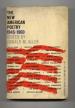
The best American anthology I have is the old 1960 Grove Press THE NEW AMERICAN POETRY edited by Donald M. Allen. Have been reading it lately -- Olson, Duncan, Ginsburg, etc. Love those statements on poetics. Has there been any real groundbreaker in that area since Olson's PROJECTIVE VERSE? (i.e. linelengths = breathlengths, the page as field...) It seems to me that pretty well all the formal possibilities within the static typewriter/typeface world of Olson's day (and pretty much our day) were outlined there. As we become digitalized, of course, we have juxtapositional possibilities of words and image or even wallpaper background that you could only dream of as you evolved your scissors-and-tape TV (text-visual) series a decade or two ago. Not to forget accompanying soundbites, as poetry enters the domain of multimedia. Even within the restrictive realm of print, variety of fonts and colours available to us -- consider these EXPRESSIVE POSSIBILITIES -- would have been unimaginable in Olson's day. Master a program like Flash and you can have those words going any direction you want, spiralling around, etc. All these are ways we can expand, slickly and seamlessly, on Olson's notions.
I've since acquired the Strand anthology Allen talks about below -- ordered it used from a Virginia bookstore through Amazon.ca for all of $3 (well, with shipping, $7 Canadian.)
Funny, without knowing it at the time, Allen and I were talking about what could be seen as the two key anthologies of post-war American poetry. (If there were others that may be considered key, I just don't know of them.) Between these two, the eleven poets they have in common -- John Ashbery, Gregory Corso, Robert Creeley, Edward Field, Allen Ginsburg, Le Roi Jones, Kenneth Kotch, Denise Levertov, Frank O'Hara, Charles Olson, Gary Snyder -- would suggest a considerable overlap, but both are big anthologies: the Strand anthology comprises 92 poets, and the Allen anthology 44. And indeed, the contrast in tone and argument couldn't be greater. The Strand anthology includes chiefly lyric poets, a lot of them celebrated professor poets that published with big "mainstream" presses and that Ron Silliman lumps into the SoQ (for those who don't know, School of Quietude), including AR Ammons, John Berryman, Robert Bly, Elizabeth Bishop, Donald Hall, Donald Justice, Anthony Hecht, Robert Lowell, Adrianne Rich, Sylvia Plath, Anne Sexton, James Tate, Richard Wilber, and Mark Strand himself. The Allen anthology includes a number of wilder shrubs like Edward Dorn, Robert Duncan, Lawrence Ferlinghetti, Jack Kerouac, Jack Spicer. The Allen anthology is a conceptually bolder and more powerful anthology, delineating for the first time groupings or "milieus" that -- however arbitrary and, as Allen himself put it, "for the most part more historical than actual" -- have remained sharply etched in our mental geography: the Black Mountain group, the San Francisco Renaissance, the Beat Generation, the New York Poets. With its essays on poetics -- including that benchmark essay by Olson -- it is definitely a precursor of Lang Po. The Strand anthology is a pretty typical good-poems -written-by-poets-in-alphabetical-order selection. Globally more inclusive than the Allen anthology, it draws a far diffuser picture. Even the poems selected in the Strand anthology of poets also in the Allen are, are formally speaking, the more conservative poems, or at least look more conservative within the constraints of the shorter selection (i.e. 1-3 poems for most poets) and smaller page size: these poets just don't stand out alongside the Hugos and Wilbers as they could. If anything would argue for the validity of the distinction Ron makes between the SoQ and Avant/post-avant, it would be these two anthologies -- however much he rankles by his obsessive harping on it (and however much I disagree with the way he flings that derogatory term - SoQ - around.)
-- a little post script: funny how much we can overlook in the heat of writing, i.e. when I wrote on that hot June day that "pretty well all the formal possibilities... within the typeface world" were outlined by Olson's essay. What about Concrete poetry? What about -- taking a step "backwards" a moment -- poetic forms or the so-called New Formalism? Actually, what I was referring to was a certain scope of free verse possibility that Olson had opened up for for me over the previous few years...
Tuesday, April 19, 2005
Gould vs. Silliman & the School of Quietude
Henry Gould has retired his blog HG Poetics (sorely to be missed by some), only to become (last Friday at least) a formidable squawkbox demon on Silliman's blog.
Ron Silliman had been holding forth again (as always these days, it seems) on his Post-Avant vs. School of Quietude thesis, a binary which like all dualisms becomes oppressively reductionist when adhered to at any lengthy length. Especially when he lumps people like Sylvia Plath, Theodore Roethke, John Berryman, and Robert Lowell into presumably stuffy and "quiet" realm of the School of Quietude (SoQ).
Henry Gould's challenge to RS's assumptions couldn't be better put. So far RS hasn't even acknowleged it, let alone directly contested it. I transcribe the most incisive of his three April 15 riposts here (the others are hilariously ironic, one in mock-Shakespearean style... check them out)
The SoQ/post-avant theory is a mountain of polemic founded on pure special pleading. It's "us vs. them" paranoia as convenience. Why? Because literature, art and poetry are rooted in fundamental ethical and aesthetic criteria. Inner law. And every work of art is an imperfect attempt to express that law. The effort by polemicists and literary-historical revisionists such as Silliman, Gooding and others, to promote certain forms of art and poetry on a rhetorical-collective-political basis (by which certain literary groups and trends are inherently and historically "superior" to others) is bound to fail. Because art finds its sanction only through the art itself, and collective ideologies and networks are only forms of intellectual inside trading. They corrupt the essential "work" of art -- which is to express the ethical and aesthetic problem in its own original and irreducible terms.
To which I say, Amen.
Maybe this swipe is the only one Henry will make before flying back to his solitary roost.... need he say more?
One question I have which I may yet stick into Ron Silliman's squawkbox at an opportune moment: Silliman writes in his definition of the SoQ that it was Edgar Allen Poe who came up with the term, to describe (I'm paraphrasing here, & also drawing on his earlier definition of the so-called "School") a dominant group of conventional (viz. mediocre) writers and reviewers who accused him of not being "quiet" enough in his writing. To me a phenomenon that corresponds to Poe's notion of a School of Quietude does exist. You can see it in any of the array of mostly University based reviews that publish so much safe, quiet, peculiarly insipid material. See my review of last fall's ARC as an example. Yet if we look at Poe in comparison with Whitman (the real post-avant prototype), he definitely comes across as British-accented, narrow, conservative, even like -- curse the thought -- a Sylvia Plath or Ted Hughes. I think by Silliman's definition, Poe would be a hard-core SoQ'er. He definitely doesn't seem very post-avant to me.
Ron Silliman had been holding forth again (as always these days, it seems) on his Post-Avant vs. School of Quietude thesis, a binary which like all dualisms becomes oppressively reductionist when adhered to at any lengthy length. Especially when he lumps people like Sylvia Plath, Theodore Roethke, John Berryman, and Robert Lowell into presumably stuffy and "quiet" realm of the School of Quietude (SoQ).
Henry Gould's challenge to RS's assumptions couldn't be better put. So far RS hasn't even acknowleged it, let alone directly contested it. I transcribe the most incisive of his three April 15 riposts here (the others are hilariously ironic, one in mock-Shakespearean style... check them out)
The SoQ/post-avant theory is a mountain of polemic founded on pure special pleading. It's "us vs. them" paranoia as convenience. Why? Because literature, art and poetry are rooted in fundamental ethical and aesthetic criteria. Inner law. And every work of art is an imperfect attempt to express that law. The effort by polemicists and literary-historical revisionists such as Silliman, Gooding and others, to promote certain forms of art and poetry on a rhetorical-collective-political basis (by which certain literary groups and trends are inherently and historically "superior" to others) is bound to fail. Because art finds its sanction only through the art itself, and collective ideologies and networks are only forms of intellectual inside trading. They corrupt the essential "work" of art -- which is to express the ethical and aesthetic problem in its own original and irreducible terms.
To which I say, Amen.
Maybe this swipe is the only one Henry will make before flying back to his solitary roost.... need he say more?
One question I have which I may yet stick into Ron Silliman's squawkbox at an opportune moment: Silliman writes in his definition of the SoQ that it was Edgar Allen Poe who came up with the term, to describe (I'm paraphrasing here, & also drawing on his earlier definition of the so-called "School") a dominant group of conventional (viz. mediocre) writers and reviewers who accused him of not being "quiet" enough in his writing. To me a phenomenon that corresponds to Poe's notion of a School of Quietude does exist. You can see it in any of the array of mostly University based reviews that publish so much safe, quiet, peculiarly insipid material. See my review of last fall's ARC as an example. Yet if we look at Poe in comparison with Whitman (the real post-avant prototype), he definitely comes across as British-accented, narrow, conservative, even like -- curse the thought -- a Sylvia Plath or Ted Hughes. I think by Silliman's definition, Poe would be a hard-core SoQ'er. He definitely doesn't seem very post-avant to me.
Subscribe to:
Posts (Atom)